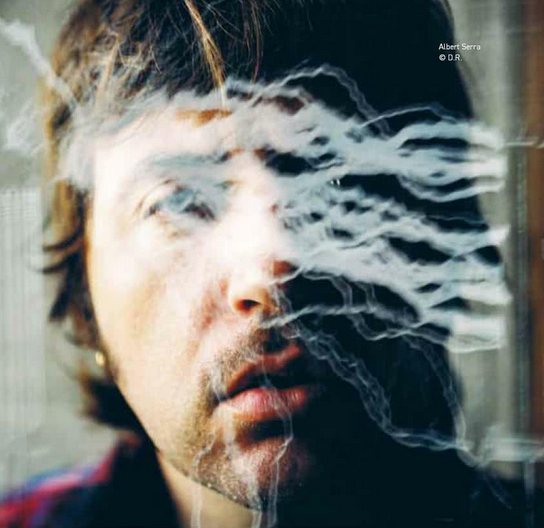
Albert Serra shot his first film in Crespià, a kind of entertainment enacted in Empordà fashion, which already suggested the instinct of a brilliant and somewhat controversial film director. Perhaps that is why Salvador Dalí is one of his role models: because his work is always a perfect synthesis of wisdom and spontaneity, of brutal realism and dreamlike passages, of drive and inspiration.
It represents fresh air, anyway, to Catalan cinema, which has its origin in the heart of Empordà. In Catalonia, these days, a deep dichotomy occurs in the world of cinema: there is Catalan cinema (it is unclear whether it includes only the films made in this language, or in a broader sense, films made here) and foreign cinema; one of a commercial type and auteur cinema; one type of cinema focuses on fiction and the another type documents (with alleged impartiality) what happens in the world; one type of cinema that is ‘pure’ (inscribed in a self-referential tradition) and another type that is ‘impure’ (which focuses on visual culture, beyond genres and formats)… You are one thing or the other; you belong to one group the other. Or at least until recently: the emergence, just over a decade ago, of Albert Serra (Banyoles, 1975) in the cinematic landscape of this small country adds a ‘third way’ in which, to some extent, two trends merge; two trends which, separately, would be part of the second group, i.e., the impure auteur cinema.
Plain speaking, leaving commercial cinema aside (which is mechanical and impersonal), Serra has harnessed the best of the School of Barcelona and the field of documentary, which, at the time, Joaquim Jordà (1935-2006) synthesised, and at the same time, he has managed to naturally add himself to the ranks of contemporary art, following in this way the path started by Pere Portabella (1929). Who best understands the originality and turning point that the filmmaker from Banyoles represents is the film critic Àngel Quintana: Serra tells stories, but breaks with fate to attach much more importance to the artistic atmosphere; he uses mythical figures in a minimal register accentuating their mundane nature, he breaks with drama discourse working with non-professional actors and plasticity becomes one of the key factors in his work, he wrote recently in Cahiers du Cinéma.
As he himself explains: I just try to film life. I set the camera up and wait for things to happen. This is why I seldom intervene during the shooting of my films; in fact, I often turn back and I don’t even watch the scene being shot... The most important part of my work will be editing.
And so it is that Albert Serra, as we said above, perfectly embodies the figure of the artist-filmmaker (in the manner of Fassbinder or Pasolini), who creates fiction in order to show life rather than reality. In this way, it does not come as a surprise how the author of Honor de cavalleria gives autonomy to the artwork: The appeal of a good film is that it can never be univocal nor evident. Depending on how you look at it, even the film director does not know what he is doing: he finds out in the end, when it works by itself. This may seem tragic but it would explain, for example, the presence of moral and aesthetic evil in art: its function is never teaching a lecture, rather it does the contrary. Ultimately, concludes Serra, nothing stops a son of a bitch from being a great artist or brilliant writer. Examples are not needed.
The presence of Albert Serra in the great contemporary art events such as Documenta 13 in Kassel (2012) and the Venice Biennale (2015) validate the filmmaker as a worthy successor of what might be called the “Dalian anti-academy”. And please don’t get me wrong: I am not talking about the surrealist painter but the man-icon who used to display himself through a complicated (rather than complex) performative gesture, which is what captivated Warhol and still fascinates Jeff Koons, and which ultimately means that the shadow of the artist from Figueres is still hovering in the Venetian event this year (by the way: the Spanish Pavilion, curated by Martí Manen is also dedicated to Salvador Dalí). This is what is about it: to the third way of the Catalan filmmaker Albert Serra we can add an updated Dalian spirit in the best sense of the word. The most creative Empordà is still expanding in concentric waves.//