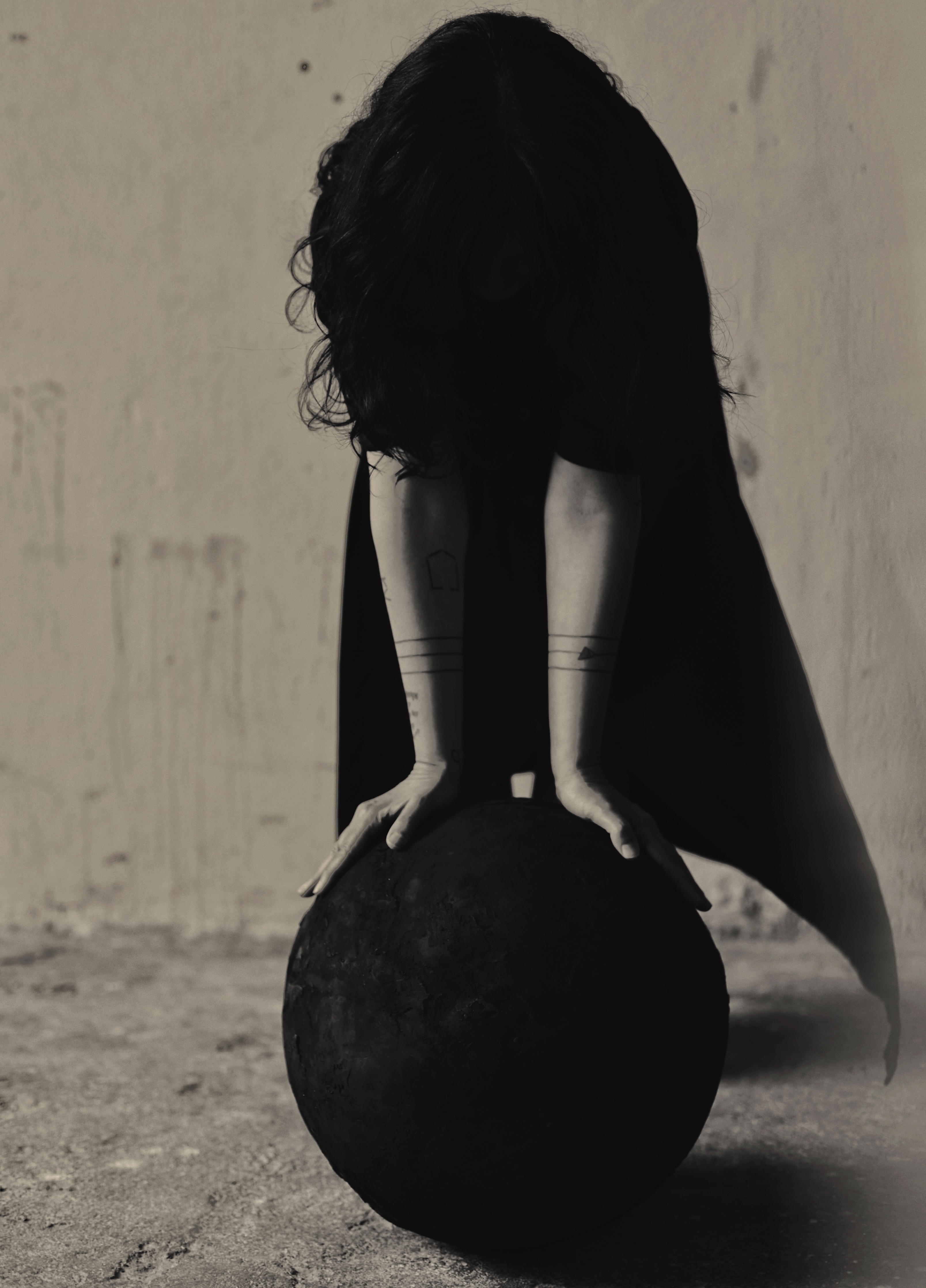
Yoyo Balagué works immersed in the lush landscape of the Baix Empordà. She has her own studio in Torroella de Montgrí. She studied Fine Arts and brings prior experience from the fashion industry. Yoyo Balagué defines herself as a "land artist." With a multidisciplinary focus, she specializes in ceramics, using the ancestral technique of pit firing to blend the earth and its elements with her creativity. She incorporates materials such as wood, fire, water, and air into her creations; each piece is a fusion between the essence of natural resources and human craftsmanship.
You've said that, for you, a perfect creation is never just an object, but rather a natural fusion between the essence of natural resources and humanity. Of all the elements you collect, which medium inspires you the most?
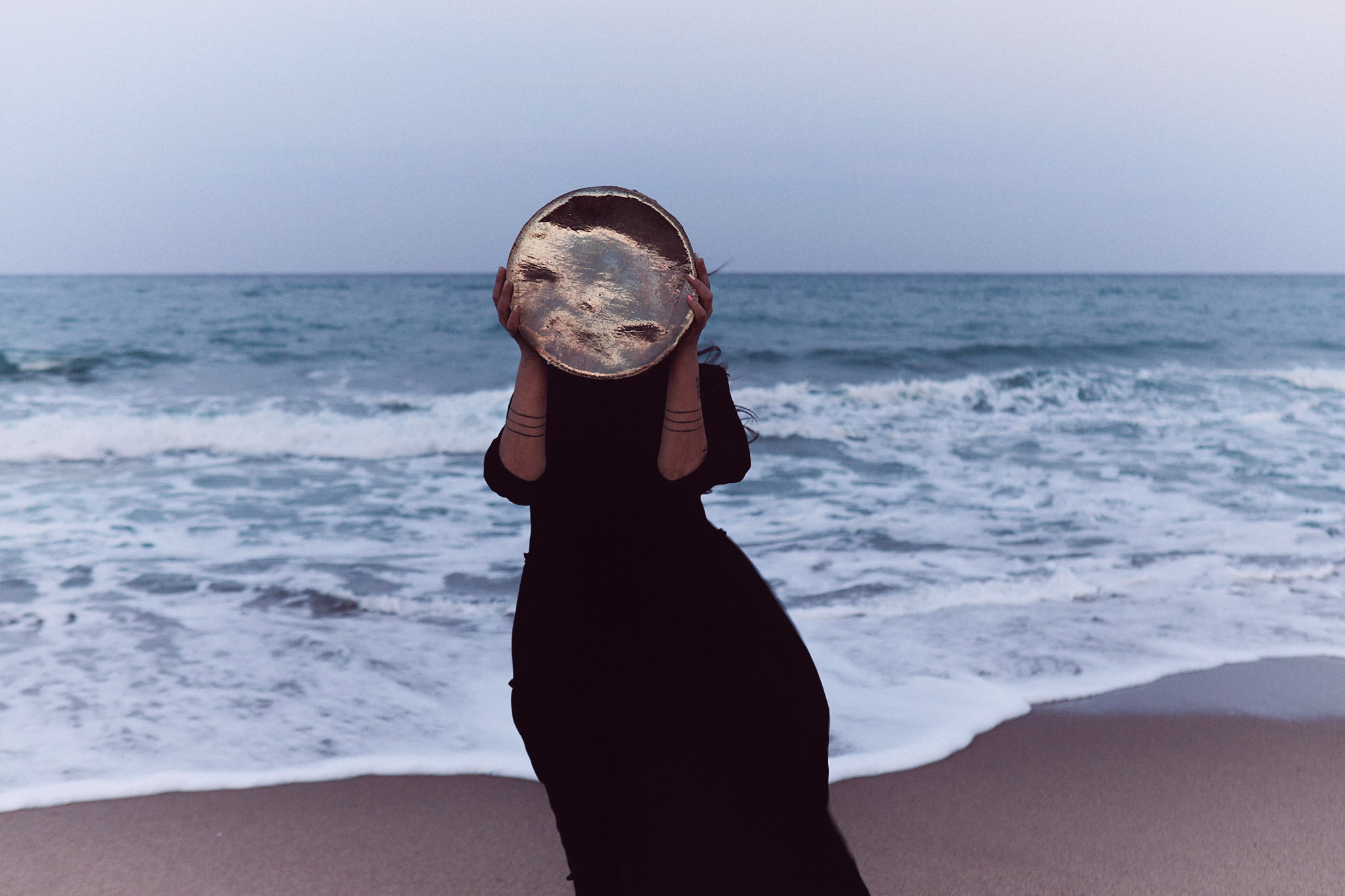
The sea, above all. There's so much movement in the sea, so many variations — that's what captivates me. My work carries the maritime character of this place, elements from the Ter River mouth; this whole environment inspires me deeply. The bottom of the sea is dark; there's a density to it, unlike the surface. When my mother sees my work, she always says, "How can someone so cheerful paint so darkly!" But I think there's a nearly dreamlike balance in my work — a vital equilibrium that holds contrasts together. That's why the Empordà landscape inspires me so much: it's confronting in itself. I'm not trying to provoke with the colors and textures of my work, but to set down roots in the landscape. That's why I spend so much time by the sea; I investigate it, I discover it. The scenery around me changes so much that I always end up revisiting it.
Can you tell me about your creative process and how you came to it?
I come from the fashion world. I worked on developing fabrics and trends — always painting in parallel, creating alongside it. I did notions, printing, everything related to materials and textile production. But one day I'd had enough; there was a kind of moment of clarity. Over time, I drifted away from that world — my philosophy of life prevailed over my profession and led me to devote myself entirely to art. Now, from my own small corner, I observe. I deeply respect my past, and I'm very grateful for it.
What attracts you most when it's time to create?
The process is what draws me in most — the whole process, in general. Touching something I'm not used to, leaving my comfort zone, stepping into the unknown. The act of discovery. Curiosity.
I imagine that devoting yourself fully to art meant peeling back layers to reach something essential, no?
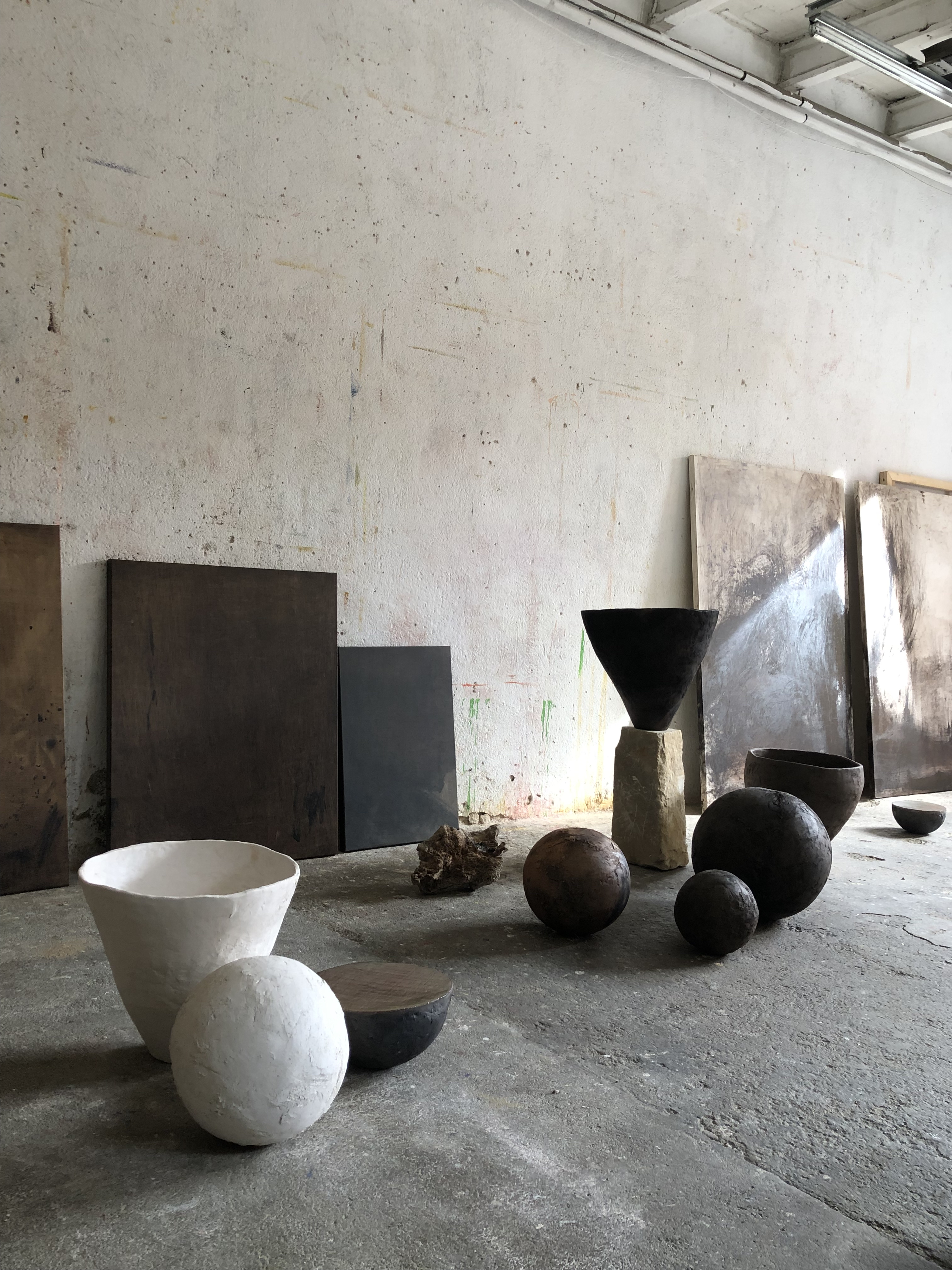
Yes — returning to the beginning, to that balance of life I search for in my work. Though I also push myself to leave my comfort zone and mix techniques. Few people know I paint, but painting is actually where I started. I've done printmaking, trained as a potter, worked in ceramics...
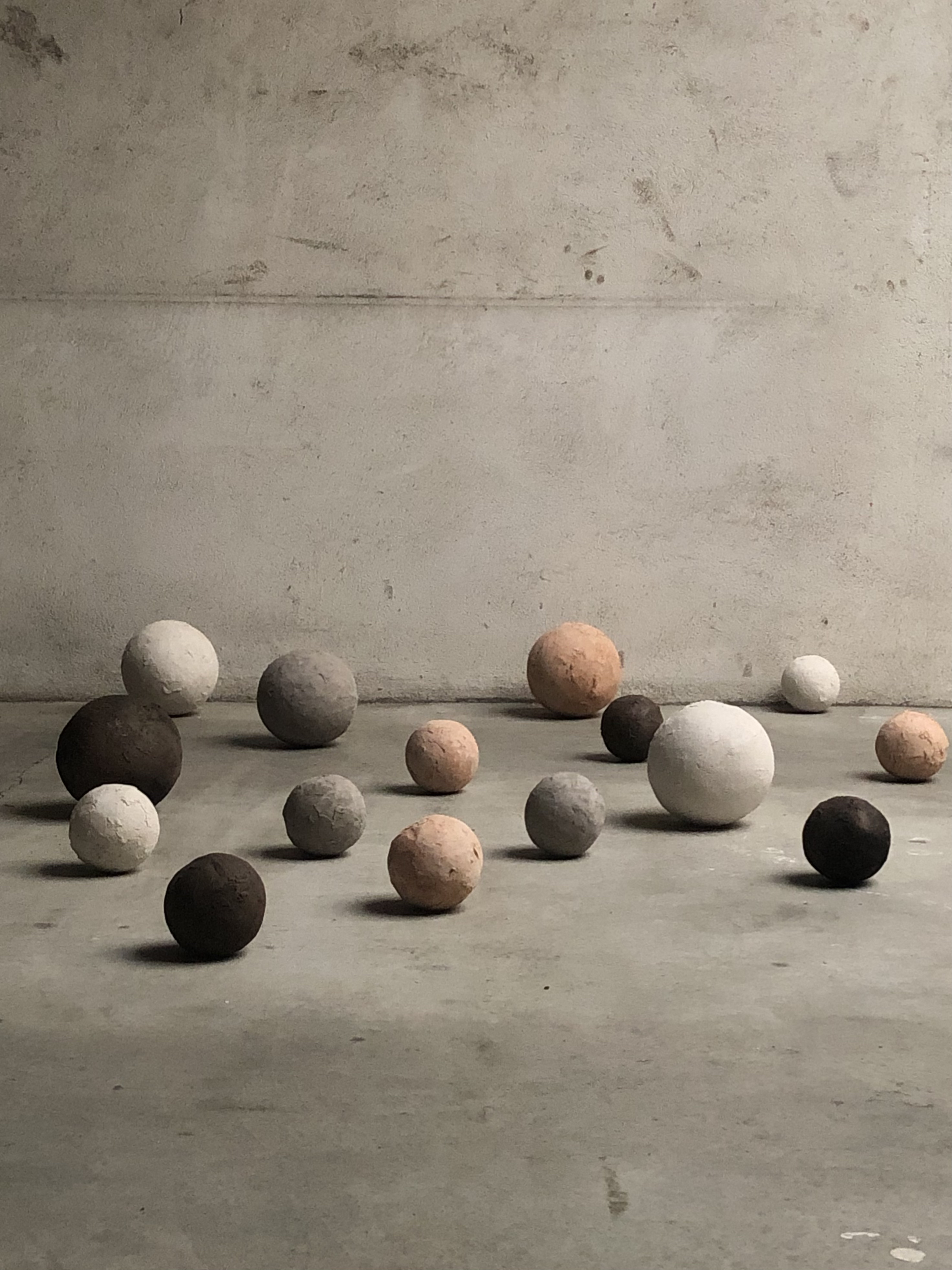
The spheres seem to have arisen from a natural and primitive, nearly cosmic geological process. What symbolism or meaning is hidden in your work?
I love Ra, the Egyptian god of the sun. I always sign my ceramic pieces with "RA." I don't do it with my paintings, but my ceramics always carry that inscription. I think that, in some involuntary way, I've made that association.
Do you think your work finds beauty in imperfection?
I love that mistakes are part of the piece. Cracks and stains are more than welcome. The generic concept of beauty is almost impeccable, as if there were no process of formation, no flaw.
It's striking how you're able to carry your creative process into every part of your life as an artist, especially since your work carries such a heavy physical and emotional weight.
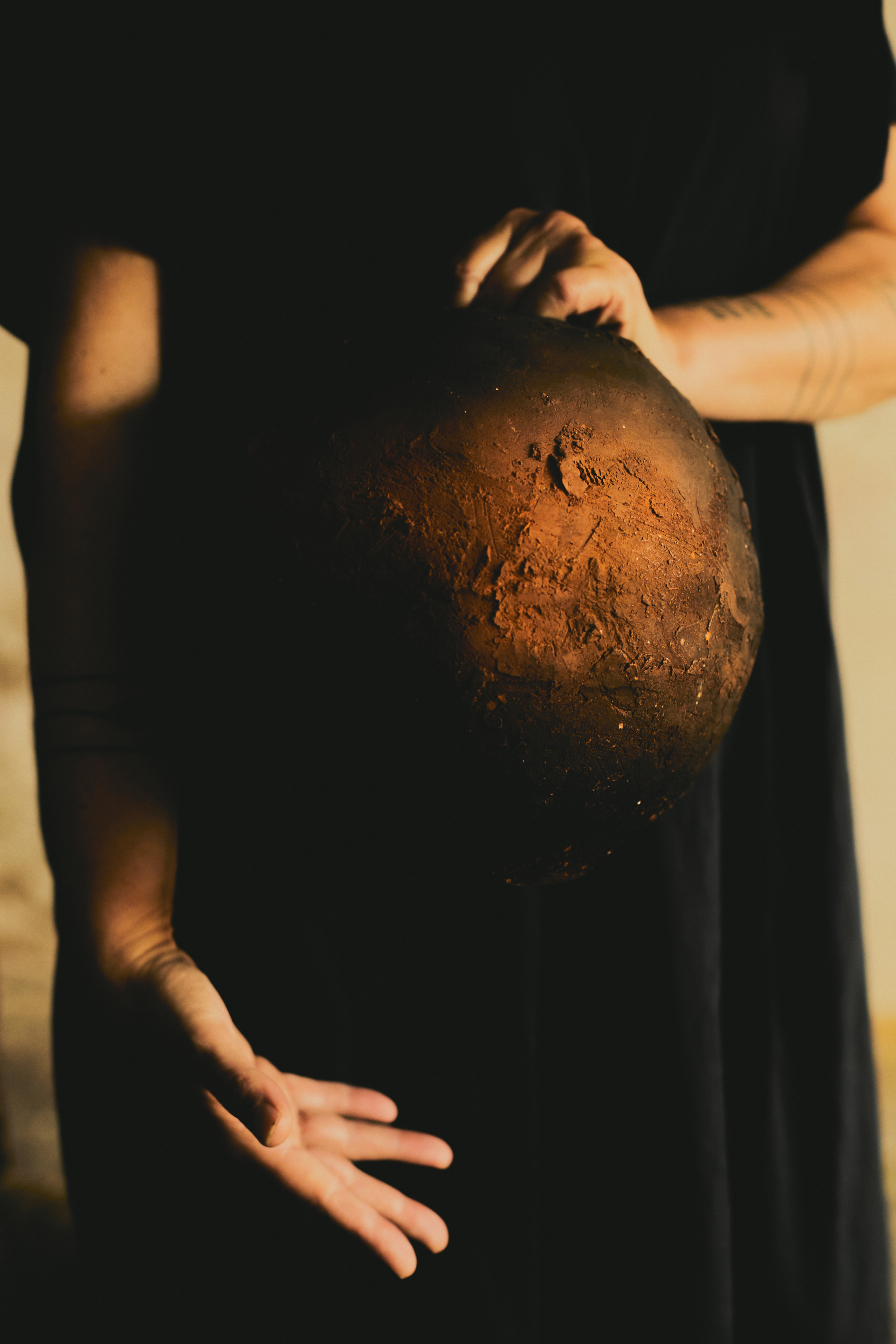
This happens above all with ceramics. You have to master the clay. I don't have a wheel, for instance — I do everything by hand, using age-old techniques: coiling, building up the form. You have to be truly patient and not get frustrated when pieces break, because ceramics are unpredictable. Working with it is a constant experiment — investigating its plasticity, getting to know what's in your hands, letting yourself be led, shaping forms. Pit firing, for example, carries a heavy physical and emotional toll. When I trained as a potter, they made me work hard on detachment, because everything you make, you eventually have to let go of. I spent nearly two years training at the Escola de la Bisbal. There are pieces I've had to let go of, others I've kept close. Others are born from mistakes and end up spectacular. That's the natural beauty of mistakes — it happens when so many things you can't control come together, and you become part of that creative process.
Yoyo Balagué expresses herself through art. Her language of expression is curiosity itself. In her work, she looks to how erosion — shaped by nature over time — has forged the Empordà landscape, with its hollowed-out coves, fractured coastline, and jagged cliffs. Her process is a ritual that runs through every part of her life; it is a meditation, a way of connecting with a primordial state. Her techniques fuse together, creating a sense of gravity, forging a unique and undeniable seal — one that is pure and honest.